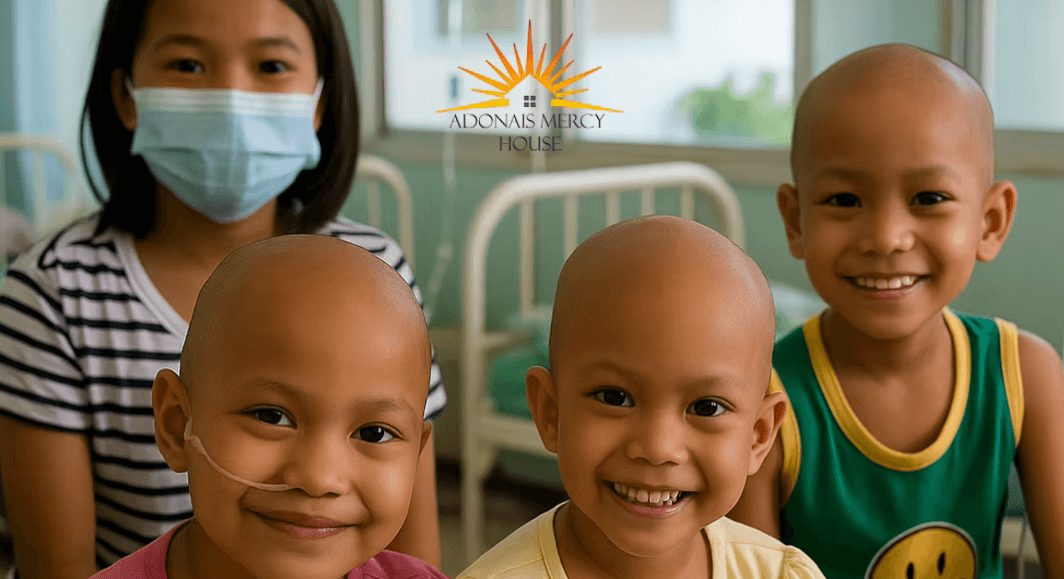
When a child has cancer, the suffering is never theirs alone. Beside every bed stand mothers and fathers carrying a quieter burden—the next test, the price of medicine, the long journey home—while trying to stay steady for a child who is already afraid. Nancy invites us to see that hidden weight and to ask, with mercy: who cares for the caregivers?
A message at West Highlands UMC
Mercy Through Hills and Valleys
By Nancy Caluya Nicolas
Philippians 2:1–4 · Ecclesiastes 4:9–12
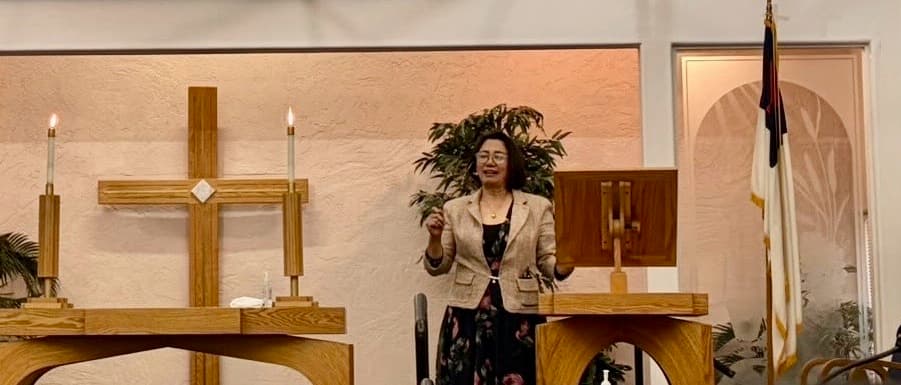
Good morning! It is such a privilege to be with you in your Sunday worship service.
I am Nancy Caluya-Nicolas, a PK—or a preacher's kid. In my case, the word preacher's has an “s” and an apostrophe. Plural. That's right. Both my father and my mother are ordained pastors of The United Methodist Church in the Philippines. Since my youth days, I have been involved with UMC's various programs and agencies, both in the Philippines and the international level.
I wish to thank District Superintendent, Rev. Hubert Rigor, whom I have known for several years, for inviting me to share with you on behalf of Adonai's Mercy House, a nonprofit organization that supports impoverished children in the Philippines who are battling cancer.
The founders of Adonai's Mercy House are from this part of the country, Walla Walla, Washington. They are Shane and Aimee Wallenda, a wonderful couple who have been touching lives thousands of miles away from here.
They began this work about a dozen years ago. I came into the picture a little more than two years ago. I have been involved in social development work for more than 30 years. I have worked in ministry among youth and students from different denominations. I have worked for the empowerment of women and for the education of children in underserved communities.
And now, I find myself walking alongside children battling cancer and their families as they journey in search of healing.
My message today is drawn from two passages of the Scripture.
Paul writes in Philippians 2:1–4:
Therefore, if you have any encouragement from being united with Christ, if any comfort from his love, if any common sharing in the Spirit, if any tenderness and compassion, then make my joy complete by being like-minded, having the same love, being one in spirit and of one mind. Do nothing out of selfish ambition or vain conceit. Rather, in humility value others above yourselves, not looking to your own interests but each of you to the interests of the others.
And Ecclesiastes 4:9–12 reminds us:
Two are better than one… If either of them falls down, one can help the other up… A cord of three strands is not quickly broken.
These passages speak to me about one thing: we are not meant to walk alone.
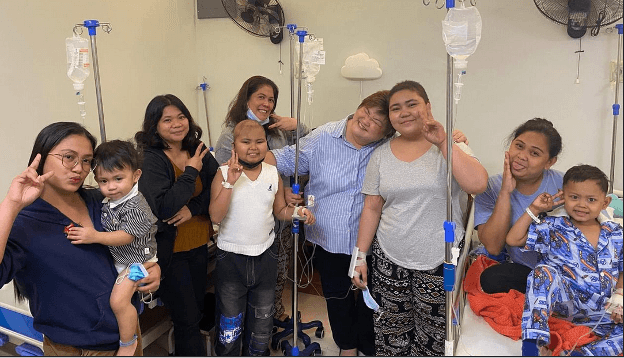
Our nonprofit organization, Adonai's Mercy House, maintains a pediatric oncology ward in Mary Johnston Hospital, a 119-year-old United Methodist mission hospital in Tondo, Manila.
It is a small ward. There are five beds.
I have stood in the corridors of that old hospital. I have seen children lying in those beds and thought to myself: “These kids did not ask for the battle they are fighting.”
These children have learned words such as biopsy, chemotherapy, platelet count, bone marrow aspiration, and blood transfusion before they have even learned how to ride a bicycle.
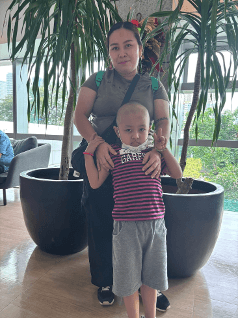
Beside those beds are mothers and fathers carrying another kind of burden. They worry about the next laboratory test. They wonder where the money for the next medicine will come from. They count the cost of transportation, food, and treatment while trying to remain strong for a child who is already frightened.
This is where Adonai's Mercy House has chosen to stand. Not from a distance. But up close. Present.
Before the pediatric oncology ward opened, many families faced a painful routine. They traveled long distances to receive treatment. They waited in crowded hospitals. Some slept on hospital benches.
After chemotherapy, they gathered their things and prepared for another difficult journey home.
Imagine a child who has just received chemotherapy, already weak and nauseated, being carried or guided through another long trip because there is nowhere nearby to rest.
Imagine the parent beside that child, praying that the dizziness will not become worse, that the child will not vomit along the way, that they will make it home safely.
Adonai's Mercy House renovated the pediatric oncology unit because we believe healing also involves dignity. Sometimes healing means giving a tired mother a place to sit. Sometimes it means allowing a child to sleep safely after treatment.
Sometimes it means having a nurse close enough to respond when a fever rises. Sometimes it means having a doctor come to the bedside rather than making a weak child travel from one room to another. And sometimes healing sounds like laughter.
Outside the oncology ward, we maintain our Healing Garden, with swings, a seesaw, and a playhouse.
A parent once said something that has stayed with me: “For a while, our children feel like regular kids again.”
Think about that. For a while, the child is not a cancer patient. The child is simply a child. Playing. Laughing. Enjoying life.
Every child deserves the dignity of being treated that way.
Since the opening of the pediatric oncology ward in 2025, more than 95 admissions involving 27 children and young patients have been recorded in the ward. They received chemotherapy, blood transfusions, and the care that surrounded those treatments.
But the numbers tell only part of the story. Behind every admission is a name. Behind every name is a family. Behind every family is a story. And behind every story is a child whom God knows and loves.
But the ministry of mercy does not end at the ward. Some families need help with laboratory expenses. Some need medicines. Some need wheelchairs. Some need emergency transportation.
And some families face the moment every parent dreads—the death of a child.
Since I joined Adonai's Mercy House two years ago, the organization has provided burial assistance to 13 families.
And here we come to one of the deepest truths about Christian ministry. We want to be people of healing. We pray for miracles.
We pray for good laboratory results. We pray for another birthday. Another Christmas. Another school year.
But sometimes the answer to prayer is not the healing we hoped for. Sometimes the child dies.
What then does mercy do?
The psalmist speaks of walking through “the valley of the shadow of death.” He does not say that we will never walk through the valley. He tells us that we do not walk through it alone.
That is where mercy remains. When a child has cancer, the child is not the only person who suffers. There is a mother. A father. Brothers and sisters. Grandparents. An entire family carrying the weight of the illness.
So Adonai's Mercy House began asking another question: Who cares for the caregivers?
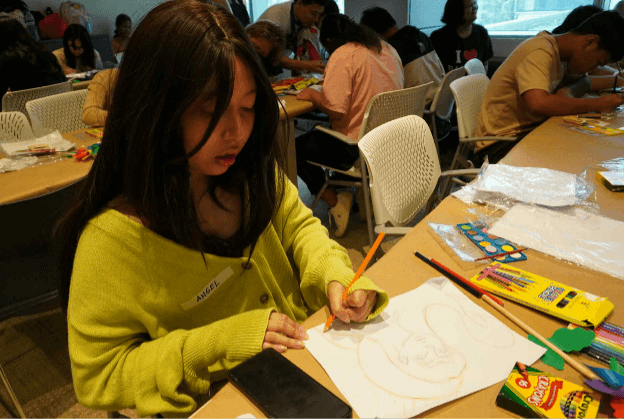
Through parenting support, creative journaling, parent development, and wellness activities, parents are given opportunities to breathe, reflect, and recover.
Through massage therapy training, caregivers learn practical techniques to comfort their children. And perhaps some of those skills may eventually become livelihood opportunities for parents who spend long periods in the hospital.
To us, this is what holistic mercy looks like. We do not simply ask, “What medicine does the child need?” We also ask: “What does this family need?”
Because the family is part of the healing journey.
In my several decades in the social development field, I have learned one truth: A mission without partners is like a boat without paddlers.
Without paddlers working together, the boat simply drifts. And if we believe that the Church is one body, then the suffering of these families belongs to all of us. This is why partnership matters.
There are children who need us.
The story of Adonai's Mercy House has not been a straight road.
There have been hills. And there have been valleys. There has been growth. And there has been grief. There have been celebrations. And there have been funerals.
But through all of it, one thing has remained: Mercy.
We continue to believe that five beds can become the beginning of a bigger ministry because God has never measured a ministry only by its size.
Jesus often began with something small. A handful of loaves. A few fish. A mustard seed. A small group of disciples.
God has always known how to begin great things with what appears to be insufficient.
Five beds may look small. But five beds can become five places where a frightened child discovers safety. Five places where a parent discovers that someone cares. Five places where a child can laugh again.
And perhaps that is what God asks of us. Not to have everything. But to offer what we have. Not to wait until the task becomes easy. But to begin where we are.
Not to ask whether our contribution is enough. But to ask whether we are willing to become part of something greater than ourselves.
For this is what the Gospel asks of us—not simply to speak about mercy, but to become its hands and feet. When a child is frightened, may we be there. When a parent is exhausted, may we be there.
When a family grieves, may we be there. When a hospital opens its doors to the poor, may we be there. And when God gives us another hill to climb, may we climb it together.
Paul reminds us to look beyond our own interests and to consider the interests of others. Ecclesiastes reminds us that two are better than one.
And the Gospel reminds us that love is not merely something we say. It is something we do.
We are the body of Christ. We are the hands of mercy. We are called to walk with one another through the hills and the valleys.
And by God's grace, we will keep walking together until every child knows that he or she is not alone.
In the name of the Father, the Son, and the Holy Spirit. Amen.